
Hypermarket 3D: Store Cashier
Sunday.ggSimulation
4.44.01K Reviews
- Version
- 300.1.1
- Installs
- 50.00M
- Age Rating
- Everyone
Screenshots
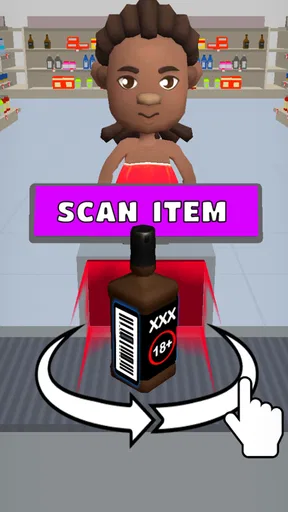
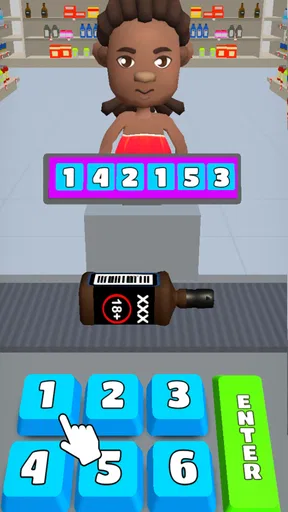
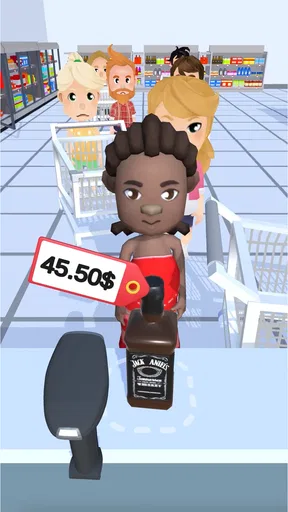
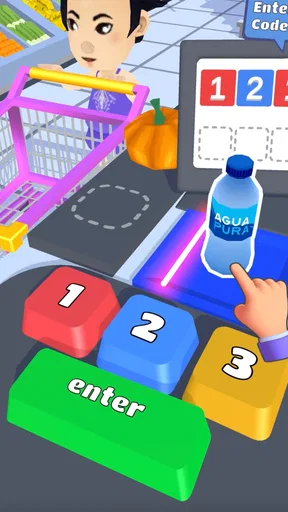
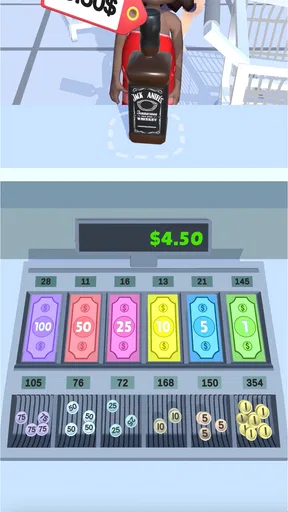
Our Review of Hypermarket 3D: Store Cashier
 Analysis by Appyee
Hypermarket 3D: Store Cashier is the kind of simulation game I open when I want something immediate rather than a long strategy project. I step into a supermarket role, handle cashier-style tasks, and watch a short chain of actions turn into progress. The appeal is easy to understand: there is no complicated story to learn, and the first useful action happens almost at once.
Developed by Sunday.gg, this free game sits in the simulation category and is aimed at Everyone. It has become a very familiar choice in mobile gaming, with an average rating of 4.4 from around 317 thousand ratings and more than 50 million installs. Those figures suggest that its simple shop-management idea reaches well beyond a small niche, although popularity alone does not make every session equally satisfying.
My experience with it is best described as a quick work-like routine turned into a game. I perform a task, receive visible feedback, improve the shop or my progress, and then find myself ready to repeat the process. That rhythm is the real product here. If you want deep business simulation, you may find it light. If you enjoy short, tactile jobs with a clear payoff, it is much easier to appreciate.
From the first customer action to the first reward
I focus on how the opening customer interaction turns the supermarket setting into a clear first task, then connects that action to a reward that gives you a reason to continue. I also consider a practical way to judge whether the cashier routine suits a short play session before investing more time in it.
The opening task is clear and easy to understand
The strongest part of the design is how quickly it communicates its basic idea. I do not need to study a large map, memorize a complex economy, or decide between a dozen menus before getting started. The supermarket setting gives every action an obvious context: I am there to help the store operate, and the cashier role supplies the immediate focus.
That clarity matters on a phone. A game played in short bursts should not make me spend the first few minutes figuring out what the interface expects. Here, the supermarket itself acts as a visual guide. Counters, products, customers, and the checkout area make the next step feel more natural than an abstract list of objectives would.
I also like that the first action has a physical, task-oriented feeling. Even when the underlying system is simple, the act of completing a checkout-related job feels more concrete than tapping a generic “collect” button. The setting gives the taps a reason, which is a small but important difference between a simulation that feels active and one that feels like menu maintenance.
Why the cashier perspective works on a small screen
A supermarket cashier is a useful role for mobile design because the basic loop can be understood without a long explanation. Customers arrive, the transaction needs attention, and the store benefits when I keep the process moving. That gives each short interaction a beginning and an end, which is exactly what I want when I have only a few spare minutes.
The game is also approachable for players who do not normally choose management titles. Traditional supermarket simulators can ask me to think about stock, staffing, layout, pricing, and long-term finances all at once. This one puts the emphasis closer to the front counter. It gives me the feeling of running part of a shop without requiring the full responsibility of operating a detailed retail business.
That simplification is both a strength and a limitation. I can recommend it to a younger player or someone looking for a low-pressure introduction to simulation games. I would not recommend it to a player whose main interest is building a realistic retail empire, because the cashier-centered approach is designed around immediate activity rather than demanding business analysis.
The feedback rhythm keeps the work understandable
After I complete an action, the game gives me a sense that something has happened. The customer interaction is not just a pause between menus; it leads toward progress, and that progress encourages me to handle the next task. This creates a steady rhythm: act, see the result, receive a reward, and look for the next small improvement.
That rhythm is more important than any individual task. A single checkout action would become repetitive very quickly if it had no consequence. The reason I continue is that the game connects the action to a visible sense of advancement. Even modest progress can make the supermarket feel like a place I am gradually helping to develop rather than a screen I am merely clicking.
One useful way to play is to treat each short session as a focused shift. Instead of expecting a large transformation every time, I look for the next practical improvement and stop when the loop begins to feel automatic. This makes the game work better as a break-time activity and reduces the temptation to judge it by the standards of a full-scale management simulator.
Where the repetition starts to show
The same clear loop that makes the game accessible can also become predictable. Once I understand the relationship between cashier work and rewards, the surprise comes mostly from progression rather than from discovering a new system. Players who need constant novelty may feel that the supermarket routine settles into repetition sooner than they would like.
I see this as a trade-off rather than a flaw in every situation. The repetition is useful when I want something familiar and undemanding. It is less appealing when I am in the mood for a game that asks me to adapt to changing rules or make difficult decisions. Before installing it, I would ask myself whether I want a relaxing routine or a simulation that continually tests my planning.
The game is also better suited to short, repeated visits than to a long uninterrupted play session. Its design gives me a reason to return after a break, but it does not necessarily provide enough complexity to hold my attention for an entire evening. That distinction helps set the right expectation from the start.
How the reward changes the meaning of each action
Rewards work here because they arrive after a task that makes sense in the supermarket setting. I am not simply pressing a button to make a number rise; I am completing a recognizable shop activity and then seeing the benefit. That connection gives the progression a little more weight, even though the individual steps remain straightforward.
My practical tip is to focus on the reward that improves the next part of the routine rather than chasing every available gain without a plan. When a game offers several ways to spend progress, the best choice is usually the one that makes future actions smoother or more productive. Thinking this way turns a passive upgrade sequence into a small prioritization exercise.
This is also where the free-to-play structure deserves attention. The game is free to download, while optional in-app purchases range from $0.99 to $24.99 per item. I would approach those purchases as convenience rather than as a requirement to understand the core loop. If I am enjoying the short sessions, I can continue treating progress as the main reward; if I dislike waiting or repeating tasks, spending may look tempting, but it can also weaken the satisfaction of earning improvements naturally.
Why the reset is part of the appeal
At the end of a short session, the supermarket loop does not need to deliver a dramatic conclusion. I can put the game down after a useful burst of activity and return later with the basic context still intact. That soft reset is valuable because I do not have to remember a complicated chain of decisions or rebuild my understanding of the shop every time I come back.
The next session begins for a simple reason: there is another small piece of progress to pursue. The previous actions have made the next round feel slightly more worthwhile, even if the task itself is familiar. This is the same psychological pattern that makes many casual simulation games effective, but the supermarket theme keeps it grounded in a recognizable daily routine.
I find the reset especially convenient during a commute, a waiting room break, or a few quiet minutes between other activities. I can play without committing to a long campaign. On the other hand, anyone who prefers permanent, high-stakes decisions may find this structure too forgiving. The game is built to invite another attempt, not to punish me heavily for stepping away or making an inefficient choice.
How it compares with other simulation games
Compared with farming simulations, this game feels more immediate and less dependent on long production chains. A farming title usually asks me to wait for crops, organize several resources, and plan around a broader calendar. Here, the supermarket role brings the action closer to the present moment, so I spend less time preparing and more time completing the visible task in front of me.
Compared with restaurant-management games, the tone is also different. Restaurant games often revolve around cooking orders under pressure, while this experience centers on the retail checkout and the gradual improvement of a shop. If I enjoy the satisfaction of serving customers but prefer a grocery setting to a kitchen, the distinction is meaningful.
More detailed tycoon games are the better alternative for players who want staffing decisions, financial balancing, store layouts, and difficult trade-offs to dominate the experience. Those games can offer a deeper sense of ownership, but they also demand more attention. I would choose this one when I want the recognizable fantasy of managing a supermarket without turning it into a spreadsheet.
Who will enjoy the loop, and who should skip it
I think it is a good fit for casual players, younger users, and anyone who likes simulation games built around clear tasks. It is also a reasonable choice for people who enjoy watching a small business improve one step at a time but do not want the complexity of a full tycoon game. The Everyone age rating supports its broad, accessible presentation.
I would be more cautious about recommending it to players who need a strong story, competitive multiplayer, or a deep economy. It is not the game I would choose when I want a world that keeps surprising me with elaborate systems. I would also skip it if repetitive work loops normally lose my attention quickly, because the central cashier routine remains the main reason to return.
Another useful distinction is between “relaxing” and “effortless.” The game is easy to understand, but that does not mean every player will find the repetition relaxing. Some people enjoy familiar routines precisely because they can settle into them; others need more strategic friction. Knowing which group I am in has a bigger effect on enjoyment than the supermarket theme itself.
Practical expectations before installing
The game is available free of charge, but the presence of optional purchases means I would set a personal spending boundary before playing. I would begin without buying anything and see whether the normal action-reward cycle is satisfying on its own. That approach gives me a fair impression of the design instead of judging it through the fastest possible progression.
On Android, it supports devices running version 7.0 or later. The current version is 300.0.1, so I would check that my device meets the operating-system requirement before trying to install it. These details are particularly useful for anyone using an older phone or tablet and deciding whether this is a practical download.
I would also keep my first session short. That makes it easier to notice whether I enjoy the actual cashier work, rather than confusing the excitement of starting a new game with lasting interest. If the first few rounds make me want to improve the shop, the loop is probably a good match. If they already feel like a chore, later progress is unlikely to change my basic reaction.
My verdict on the action-feedback-reset cycle
The best thing about Hypermarket 3D: Store Cashier is the connection between a simple action and an immediate reason to repeat it. I help the supermarket, receive feedback, gain progress, and return because the next small improvement is easy to understand. That is a modest design, but it is coherent, and coherence matters in a game intended for quick mobile sessions.
I would recommend it to a friend who wants a free supermarket simulation with a gentle learning curve and a clear cashier focus. I would describe it honestly as a lightweight experience rather than a detailed retail-management game. Its strengths are accessibility, recognizable tasks, and a session structure that welcomes interruptions. Its weaknesses are repetition, limited strategic depth, and the possibility that optional purchases may appeal more when progress slows.
For me, the loop works best when I accept its scale. I do not open it expecting a complex business sandbox; I open it for a short shift, complete a few tasks, enjoy the visible payoff, and stop before the routine becomes tiring. If that sounds like the kind of small, repeatable activity you want from a mobile game, Sunday.gg’s supermarket simulation is worth trying. If you want every decision to reshape a detailed store economy, a deeper tycoon alternative will serve you better.
Verdict
Strengths of Hypermarket 3D: Store Cashier
- Simple controls make it easy for casual players to pick up.
- Short levels are convenient for quick gaming sessions.
- Bright 3D visuals give the store a cheerful, accessible look.
- Varied checkout tasks help prevent the gameplay from feeling repetitive.
- Works well for players who enjoy relaxed, low-pressure challenges.
Limitations of Hypermarket 3D: Store Cashier
- Gameplay can become repetitive after completing several similar checkout levels.
- Ads may interrupt the experience, especially between short stages.
- Progression offers limited depth for players seeking a strategic simulator.
- Some levels feel more like quick mini-games than full cashier management.
- The cartoon presentation may not appeal to players wanting realistic retail gameplay.
Other Releases by Sunday.gg
View All
Cat Escape: Virtual Pet Game
Simulation4.4

Dog Escape: Cute Pet Care Life
Simulation4.4

Spinner Merge
Arcade3.5

Zoologic: Brainrot Evolution!
Arcade3.4
Similar Picks in This Category
View All
Truckers of Europe 3
Wanda Software4.3

Town Building Life Simulator
XGame Global4.2

Fidget Toys Trading・Pop It 3D
Freeplay Inc4.7

Sculpt People
CrazyLabs LTD4.4

Scary Teacher 3D
Z & K Games4.2

Hair Tattoo: Barber Shop Game
CASUAL AZUR GAMES4.3
Frequently Asked Questions
What is Hypermarket 3D: Store Cashier?
Hypermarket 3D: Store Cashier is a casual simulation game centered on the everyday tasks of working in a busy supermarket. Players scan products, handle payments, organize shelves, and complete short retail-themed challenges. Its simple controls and colorful presentation make it easy to pick up, while the variety of mini-games keeps the experience more engaging than a basic cashier simulator.
How do you play Hypermarket 3D: Store Cashier?
Gameplay is mainly based on completing quick activities accurately and efficiently. Depending on the level, you may need to scan groceries, count money, provide change, arrange merchandise, clean areas, or manage other store duties. Controls are designed for touchscreens, so most actions involve tapping, swiping, or dragging objects. Completing tasks successfully allows you to progress through additional supermarket scenarios.
Is Hypermarket 3D: Store Cashier free to download and play?
Hypermarket 3D: Store Cashier can generally be downloaded and played without an upfront purchase, although the exact availability may depend on the Android or iOS store in your region. Like many free casual games, it may include advertising, optional in-app purchases, or both. Before downloading, check the store listing for current pricing, supported devices, and purchase information.
Does Hypermarket 3D: Store Cashier require an internet connection?
The core gameplay is usually suitable for short offline sessions, which is convenient when you want to play while traveling or without reliable mobile data. However, an internet connection may still be needed for advertisements, optional rewards, updates, analytics, or in-app purchase features. Requirements can change after updates, so it is worth checking the latest store description if offline access is especially important to you.
Is Hypermarket 3D: Store Cashier suitable for children?
The game uses simple, non-violent supermarket activities and is generally easy for younger players to understand. Nevertheless, parents should review the age rating, advertising behavior, and available in-app purchases before allowing unsupervised play. Some levels may involve timed tasks or repeated actions, and advertisements can vary by region. Using device-level parental controls is recommended for children who play on a shared phone or tablet.
Play our best games!


